Halloween Games for Preschoolers: 20 Fun Toddler Activities

Planning exceptional autumn celebrations requires creative halloween games for preschoolers that inspire guests and bring joyful holiday energy to your home. In fact, historical traditions surrounding preschool games have brought communities together for generations. Furthermore, intentional design and organized activity stations transform ordinary spaces into unforgettable festive destinations. In addition, whether you are hosting an intimate family evening or a large community festival, curated details make all the difference.
Whether you prefer whimsical DIY crafts, interactive carnival games, or dramatic gothic atmosphere, there are countless inspiring options to explore. In this comprehensive guide, we examine distinctive ways to implement your setup for maximum visual and entertaining impact. Consequently, you can choose the ideal concepts that align with your budget, venue, and personal aesthetic.
| Game Name | Primary Focus | Group Size | Setup Time | Key Equipment |
|---|---|---|---|---|
| Pumpkin Patch Beanbag Toss | Hand-eye coordination | 1-5 Toddlers | 5 Mins | Cardboard pumpkin & felt bags |
| Sticky Spider Web Rescue | Fine motor pincer grasp | 1-4 Toddlers | 5 Mins | Masking tape & plastic spiders |
| Roll a Friendly Monster | Turn taking & counting | 2-6 Toddlers | 2 Mins | Foam dice & monster cutouts |
| Wiggle Worm Obstacle Course | Gross motor navigation | 3-10 Toddlers | 10 Mins | Orange cones & crawl tunnel |
| Musical Pumpkin Stepping Stones | Listening & balance | 4-12 Toddlers | 5 Mins | Foam floor pumpkins & music |
1. Pumpkin Patch Beanbag Toss Board

Pairing structured stations with exciting halloween carnival games keeps energy high. Specifically, craft a smiling cardboard pumpkin cutout featuring a wide open mouth hole for beanbag tossing. Specifically, provide lightweight, soft fabric beanbags filled with dried lentils for safe toddler handling. Furthermore, scoring successful tosses into the mouth builds hand-eye coordination and spatial accuracy. In addition, this game withstands energetic classroom play.
2. Sticky Spider Web Tape Rescue

Crisscross strips of painter tape across a laundry basket or doorway opening with sticky sides exposed. For instance, attach lightweight plastic spiders to the web. In addition, challenge preschoolers to gently rescue each spider without sticking their fingers. Consequently, this engaging puzzle refines pincer grasp skills. Therefore, focus improves dramatically.
3. Roll a Friendly Monster Dice Game
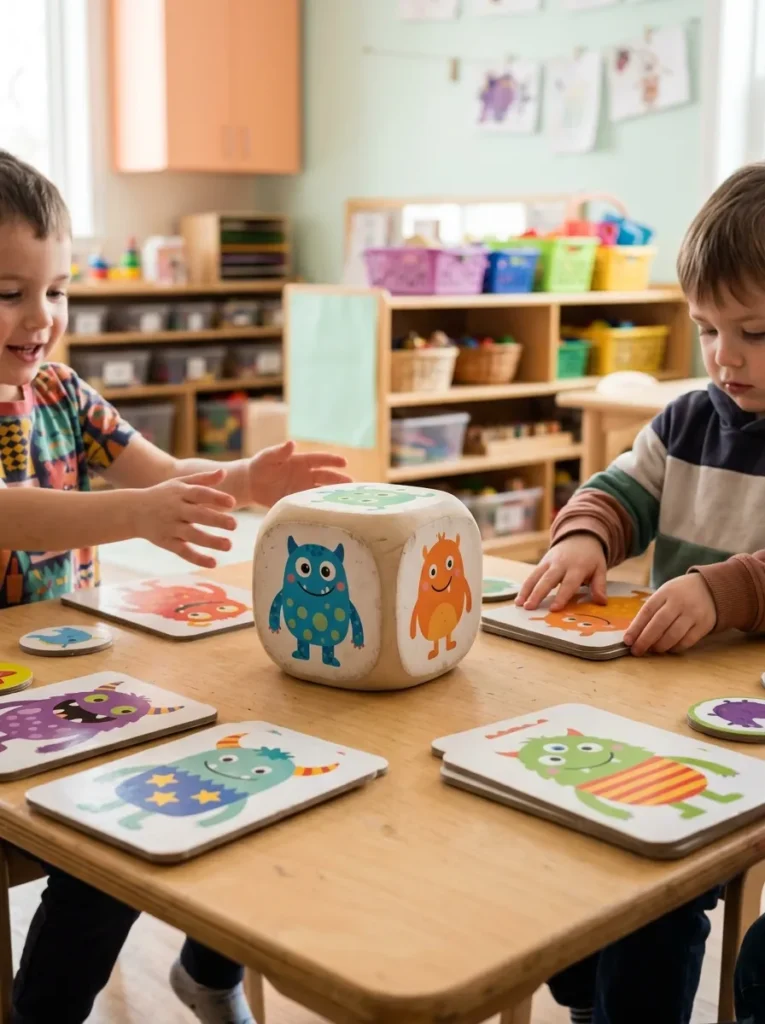
Provide large foam dice and printed monster bodies alongside bins of googly eyes, felt mouths, and colorful horns. In particular, toddlers roll the dice. This helps determine how many eyes or horns to add to their personal monster canvas. As a result, early counting skills and number recognition develop naturally through play. Ultimately, kids love their silly creations.
4. Wiggle Worm Autumn Crawl Obstacle Course

Coordinating play spaces alongside thoughtful interior home improvements mintpalment ensures children move safely. For example, set up an indoor movement course using pop-up fabric tunnels, orange boundary cones, and plush floor cushions. For example, guide preschoolers to crawl like caterpillars through the tunnel and hop over soft foam pumpkin logs. Therefore, young children develop gross motor agility while releasing excess physical energy. Consequently, naptime transitions stay peaceful.
5. Musical Pumpkin Stepping Stones

Place colorful foam pumpkin mats in a circular pattern across the classroom carpet. In addition, play cheerful autumn songs. Meanwhile, toddlers step from pumpkin to pumpkin, freezing in place when the music stops. Because the game emphasizes active listening rather than elimination, all children remain included and happy throughout. Ultimately, balance improves.
6. Friendly Ghost Balloon Volley

Draw happy smiling faces on white latex balloons using non-toxic permanent markers. In particular, challenge toddlers to keep the floating ghost balloons in the air using gentle upward hand taps. As a result, children practice bilateral hand coordination and tracking moving objects visually. Specifically, balloon play avoids any risk of injury.
7. Cauldron Color Sorting Relay

Place three miniature plastic cauldrons labeled with orange, purple, and green color markers across the room. Furthermore, scatter matching plastic balls on the floor for preschoolers to retrieve and sort into the correct cauldrons. Therefore, color recognition and rapid gross motor movement combine into an active learning game. In addition, cleanup is built in.
8. Feed the Hungry Monster Cardboard Box
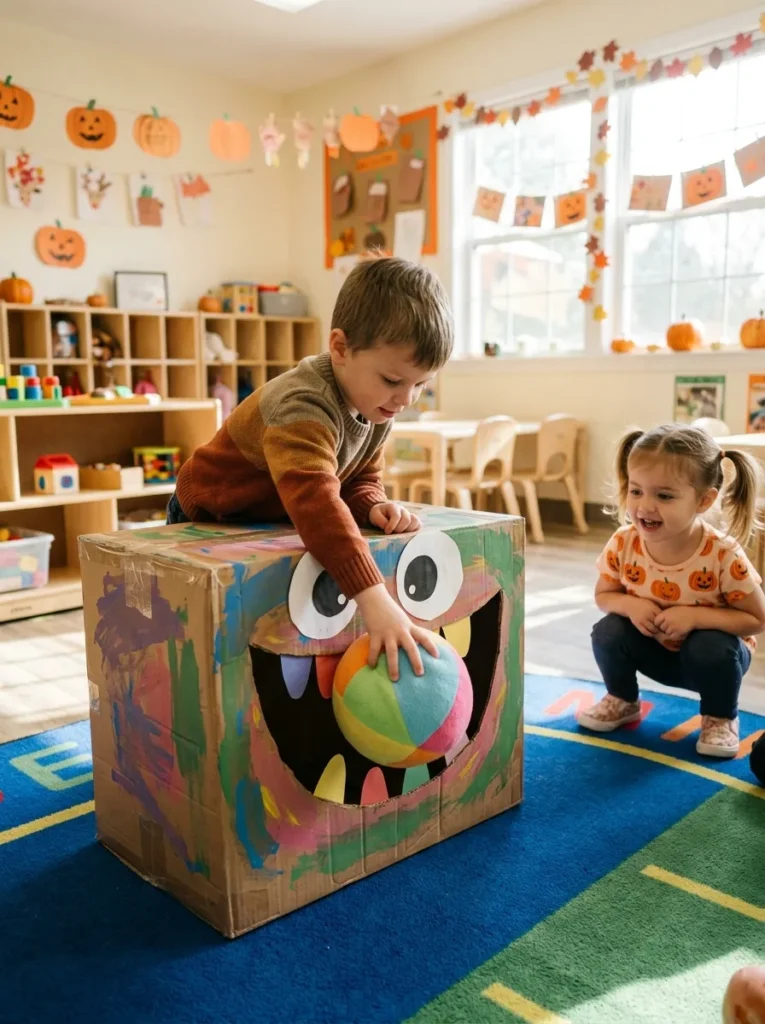
Decorate a large cardboard shipping box as a furry monster with a wide felt mouth opening. For instance, hand soft foam alphabet cookies or numbered blocks. This helps toddlers with instructions to feed specific letters to the monster. Consequently, letter recognition and fine motor placement strengthen simultaneously. Therefore, learning feels magical.
9. Gentle Witch Hat Ring Toss
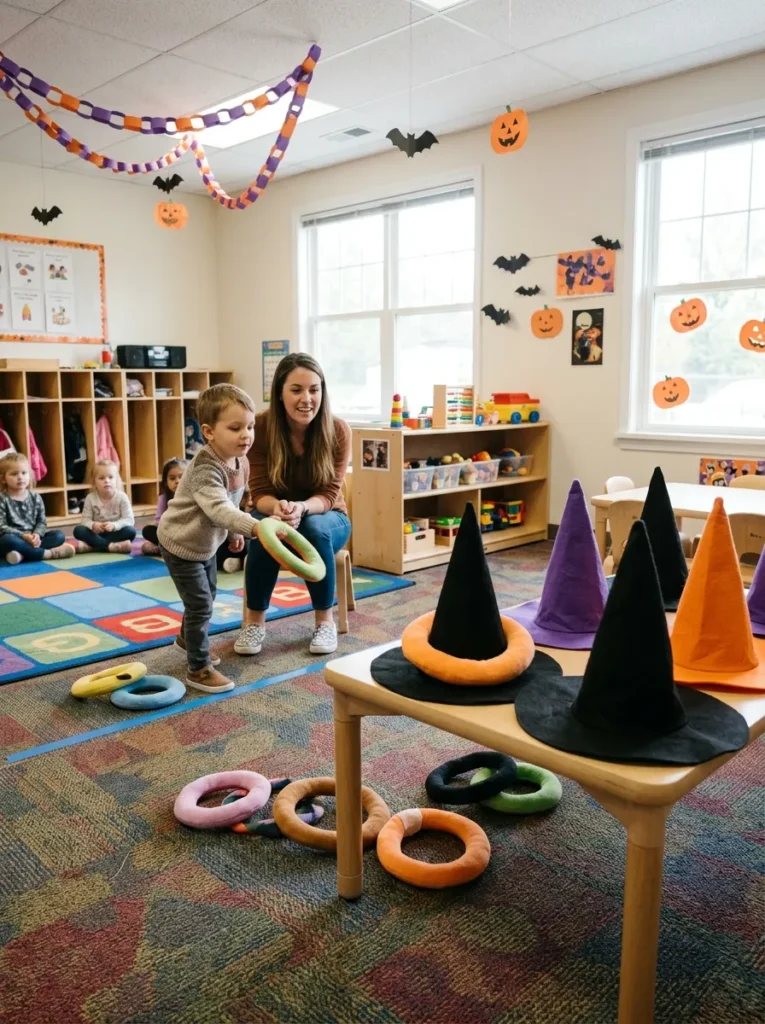
Position pointed felt witch hats on the floor and give soft, flexible silicone rings to preschoolers. In addition, let toddlers stand close to the hats so they experience frequent, encouraging success with every throw. As a result, young children build self-esteem and perseverance in a relaxed group environment. In addition, soft rings make zero noise.
10. Mummy Wrap Toilet Paper Fun
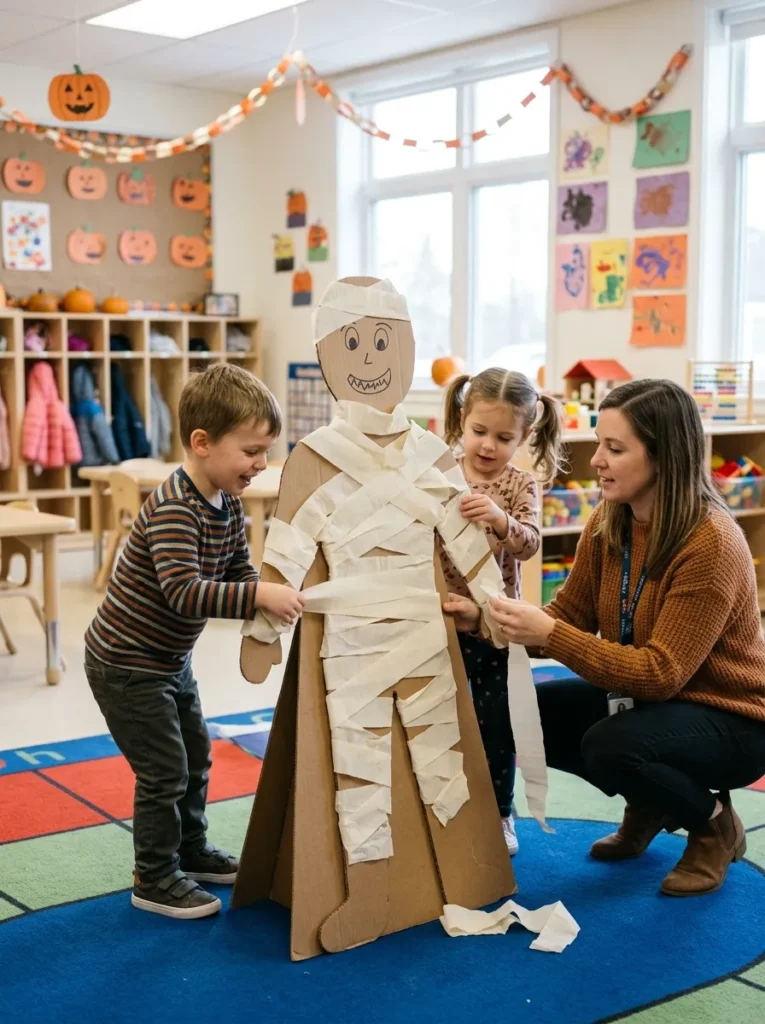
Supply rolls of soft, inexpensive toilet paper and let toddlers practice gently wrapping teacher or classmate legs. For example, the tearing and rolling action delights young children while exercising bilateral arm movements. Therefore, children participate in a classic holiday party tradition without feeling scared. Consequently, laughter fills the room.
11. Pumpkin Memory Matching Card Game

Create oversized round cardboard cards featuring pairs of friendly autumn characters like smiling bats, cats, and owls. In addition, place cards face down on a low table for children to take turns flipping pairs. Because matching games exercise visual memory and concentration, cognitive development accelerates. Ultimately, preschoolers learn patient turn-taking.
12. Spider Web Yarn Crawl Challenge
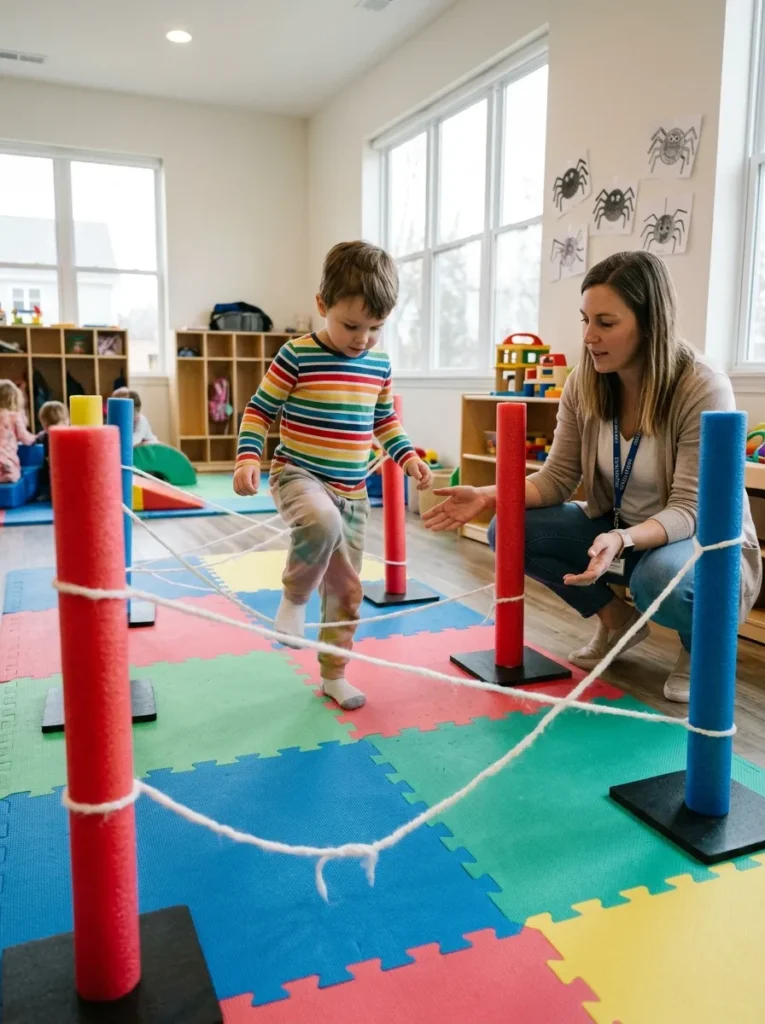
Weave white knitting yarn low between chairs in an empty playroom to simulate a friendly spider maze. Specifically, encourage preschoolers to step over and crawl under strands without knocking down hanging paper spiders. As a result, children learn body awareness and spatial navigation through active problem-solving. Therefore, rainy days stay engaging.
13. Floating Apple Tongs Scoop Challenge
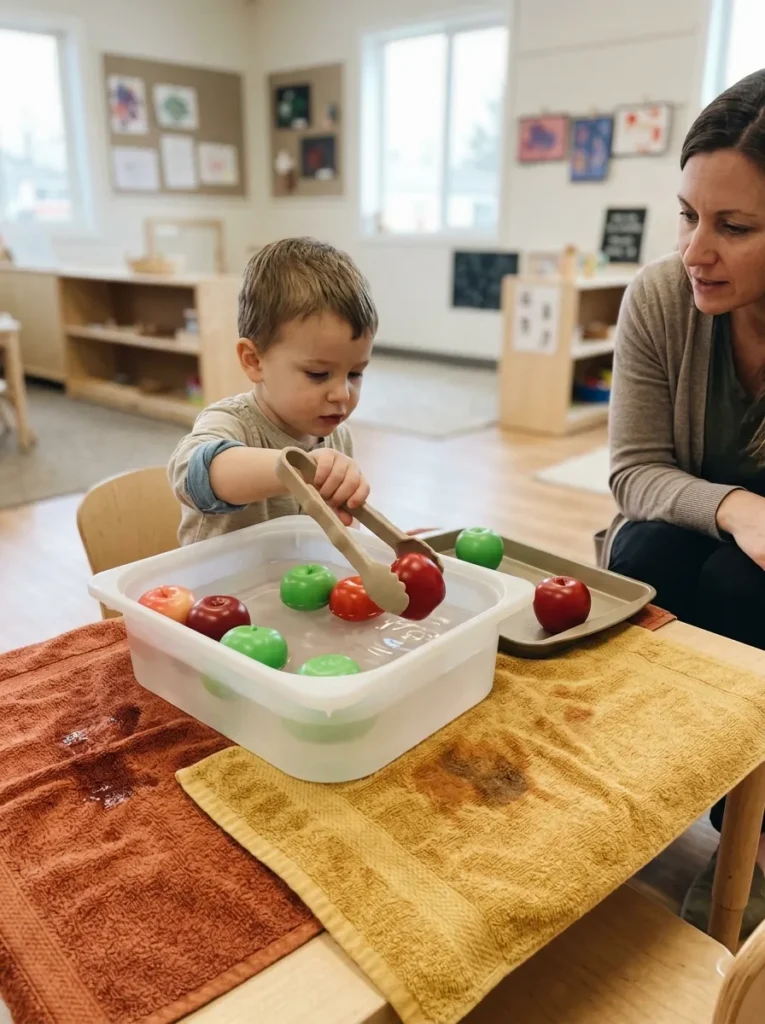
Fill a wide, shallow plastic water tray with miniature floating foam apples and plastic leaves. For instance, equip toddlers with oversized plastic salad tongs to grip and transfer apples into sorting colanders. Consequently, hand muscles required for future pencil grip and scissor control strengthen. In addition, water play calms active toddlers.
14. Silly Monster Walk Movement Game
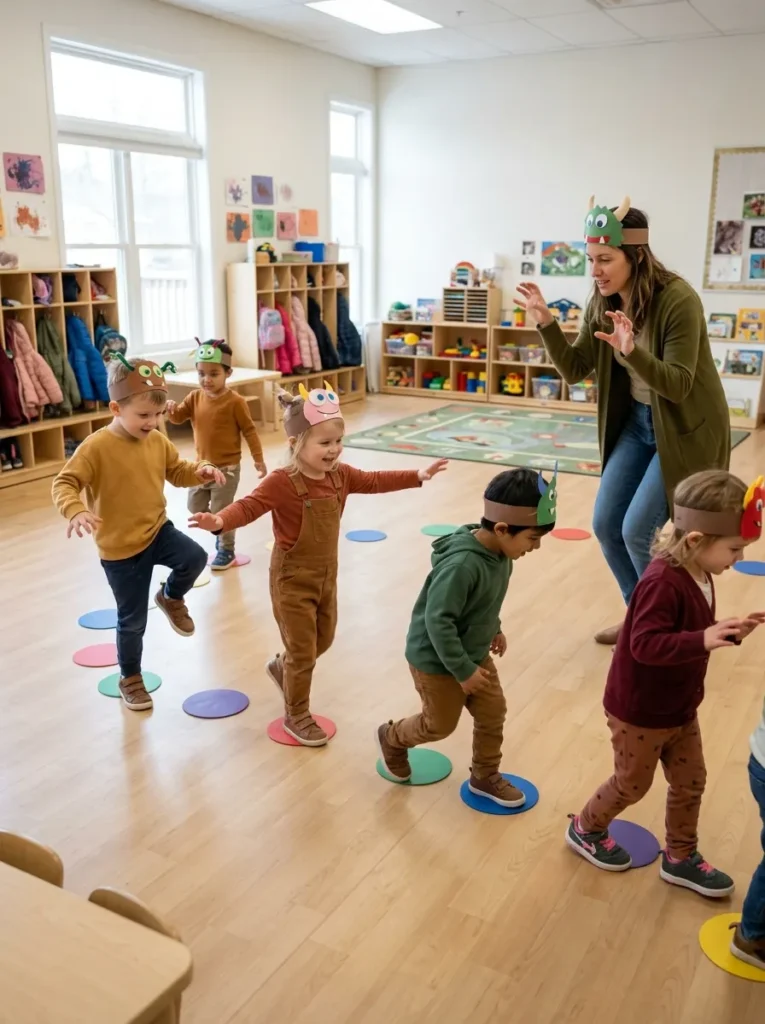
Call out imaginative movement prompts like stomping like Frankenstein. Furthermore, tip-toeing like a black cat, or flapping like a friendly bat. Furthermore, play varied tempo music on a tambourine to guide their walking speeds. Therefore, preschoolers explore creative physical expression while following multi-step auditory instructions. In addition, it builds body coordination.
15. Glow Stick Ring Toss in Dimmed Room

Dim classroom lighting softly and place glowing neon cones in the center of the play mat. In particular, give glowing necklace hoops to preschoolers to toss over the illuminated cones. As a result, children experience a mesmerizing nighttime carnival game in the secure comfort of the daytime classroom. Ultimately, visual tracking improves.
16. Autumn Sensory Leaf Hunt Scavenger Run
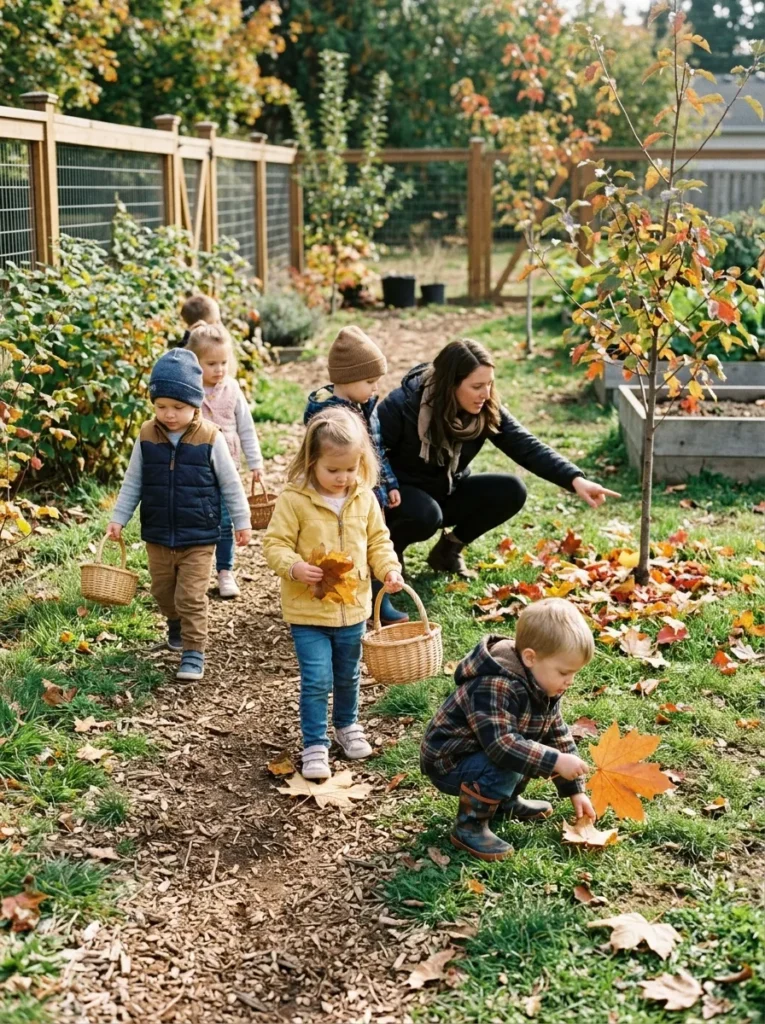
Hide laminated colorful paper leaves around the classroom containing simple shape or color symbols. Specifically, toddlers search the room with explorer magnifying glasses to find matching leaf pairs. As a result, children practice observation and categorization skills while walking and exploring. Therefore, independent exploration flourishes.
17. Candy Corn Bowling with Soft Foam Pins

Stack lightweight yellow, orange, and white paper cups into pyramid towers resembling giant candy corn. For instance, let preschoolers roll a soft foam sensory ball to knock the cup tower tumbling down. Consequently, toddlers experience the thrill of bowling without heavy balls or dangerous hard surfaces. In addition, rebuilding the tower teaches cooperation.
18. Witch Broom Sweep the Pumpkin Game

Give child-sized toy brooms and lightweight orange balloon pumpkins to preschoolers on a smooth floor. Furthermore, challenge children to gently sweep their balloon pumpkin along tape lines into a designated goal box. Therefore, children develop hand-eye coordination and motor planning in a fun domestic play format. In addition, it teaches tidy sweeping.
19. Friendly Ghost Parachute Pop Game
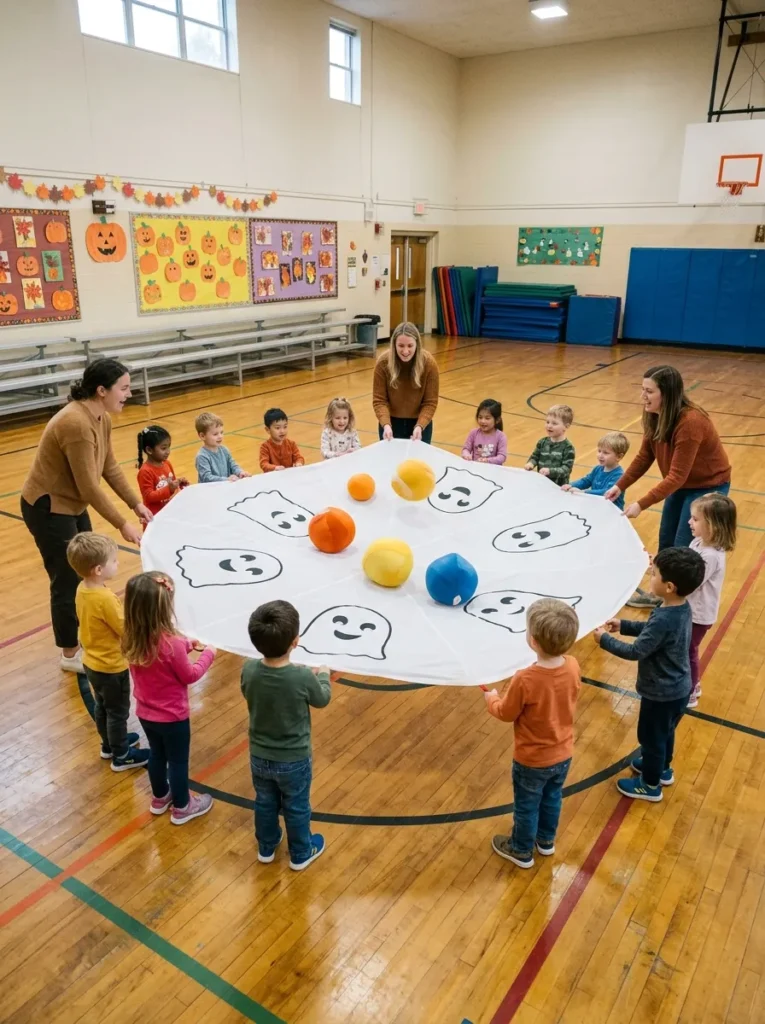
Gather toddlers around a colorful play parachute filled with dozens of lightweight white cotton balls or plush ghosts. In particular, instruct children. This helps shake the parachute gently to make ghosts dance, then shake vigorously to launch them into the air. As a result, cooperative group play and arm strength develop joyfully. Ultimately, group camaraderie blooms.
20. Pumpkin Ring Discovery Sand Dig
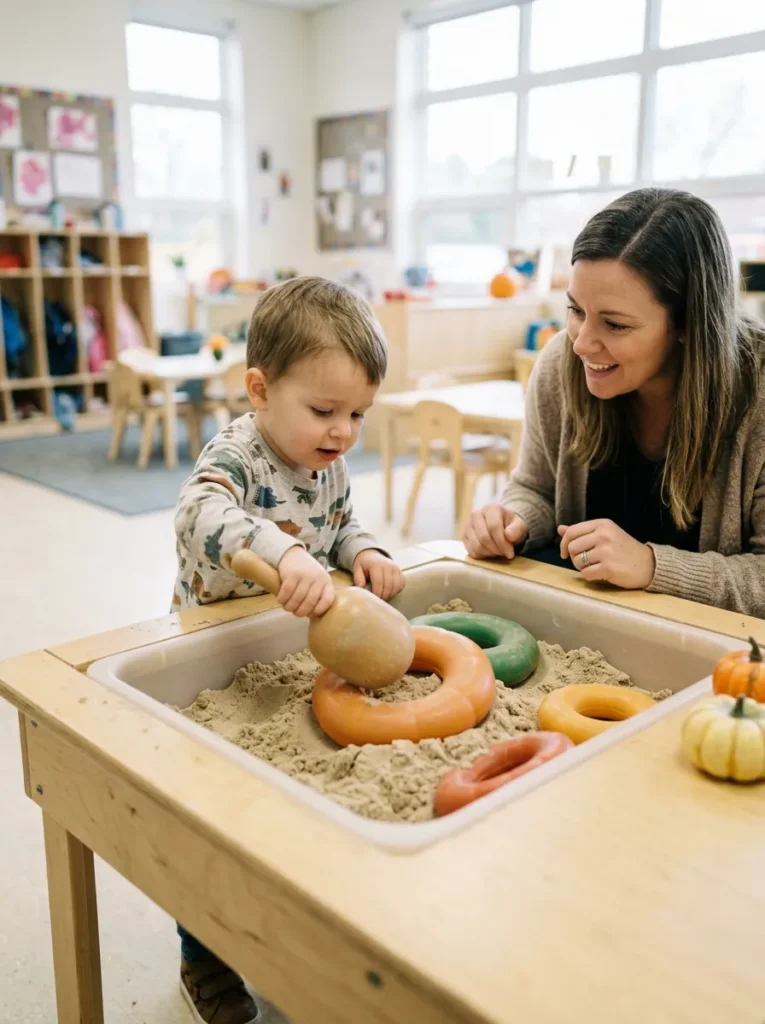
Bury dozens of colorful plastic spider rings. In addition, plastic pumpkin charms inside a shallow bin filled with clean play sand. Specifically, provide plastic sifters and small rakes for toddlers to uncover hidden treasures. As a result, the soothing sensory texture of sand relaxes children while developing fine motor tactile precision. Therefore, quiet time succeeds.
Expert Implementation Guide for halloween games for preschoolers
Specifically, executing your halloween games for preschoolers with professional precision requires advance planning and thoughtful arrangement. In particular, mapping out clear walking paths and gathering all materials ahead of time prevents last-minute stress. Furthermore, testing your lighting, sound, and interactive elements before guests arrive guarantees a flawless experience. As a result, hosts can relax and enjoy the festivities alongside their visitors.
Frequently Asked Questions About halloween games for preschoolers
How long should game stations last for preschoolers?
Specifically, rotating through short five to ten minute stations prevents restlessness and keeps toddler engagement high.
How do I manage turn-taking with young toddlers?
For instance, having multiple identical game setups allows several children to play simultaneously without long wait times.
What safety rules are most important for preschool games?
Using non-toxic, choke-safe materials larger than 1.5 inches and removing hard, sharp objects ensures complete toddler safety.
Final Thoughts & Action Plan
Ultimately, creating memorable holiday experiences with creative halloween games for preschoolers comes down to thoughtful preparation and playful enthusiasm. In addition, mixing visual charm with interactive elements ensures guests of all ages stay thoroughly engaged. Visit aroosadecor.com for more details.